pats.ng.work_bench_67128182_158548425315440_2801799019066733830_n.jpg
pats.ng.work_bench_43326420_2293141440920316_865135754222556028_n.jpg
pats.ng.work_bench_49739634_2353262464904390_1798735795811842646_n.jpg
pats.ng.work_bench_60433918_137372887368441_497835829769736629_n.jpg
pats.ng.work_bench_60477348_139688870422551_7009381683397248398_n.jpg
pats.ng.work_bench_60761931_558637984663735_2843337435139225412_n.jpg
  Some butchery was afoot on the workbench again last night. I took a hammer and chisel to the cobbled harbour side to fit another line in for the backwoods miniatures steam crane to run on. I had intended to take off the clay cobbles with ol’dremel,
  Approaching track laying time on the ‘Row’. Today I plan to finish installing the built in sound…
  This is Penpol locomotive shed, next to it in the gap to the right will be Harvey’s foundry. In my fictitious history there was a fire in the original foundry building, the decision to mend and convert the old fire damaged foundry into a large loco
pats.ng.work_bench_62644427_1172493192923552_4955057467609532216_n.jpg
pats.ng.work_bench_64520001_140889230338358_477720615528370562_n.jpg
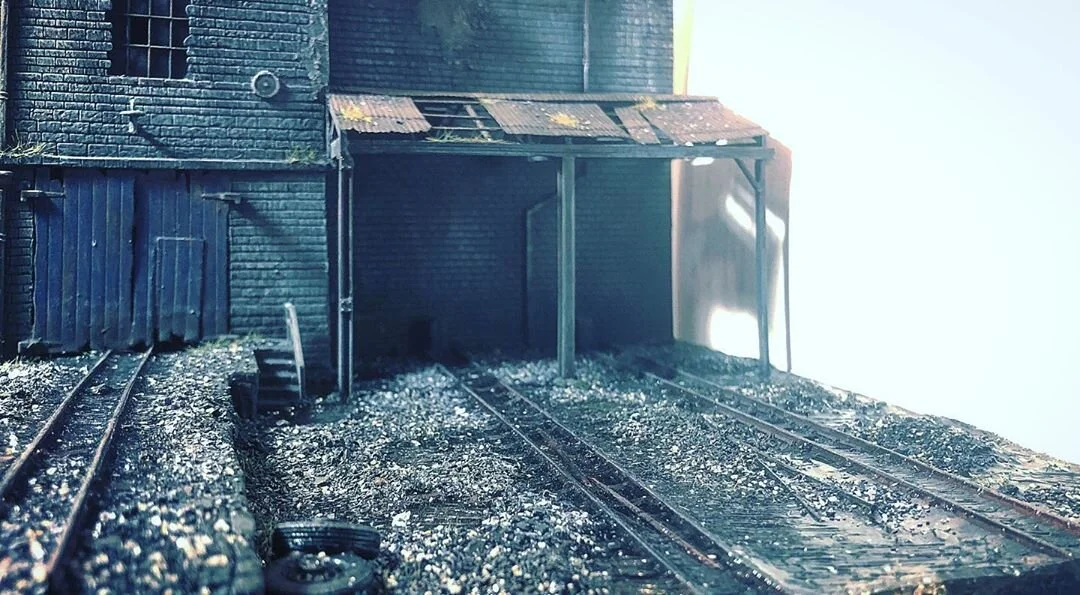
  I’ve finished building the main foundry, started the track laying, and added the clay ballast. The black triangles are the puddles which have been modelled first, stuck down with PVA, and ballasted around with clay to cover the edges. Once the clay
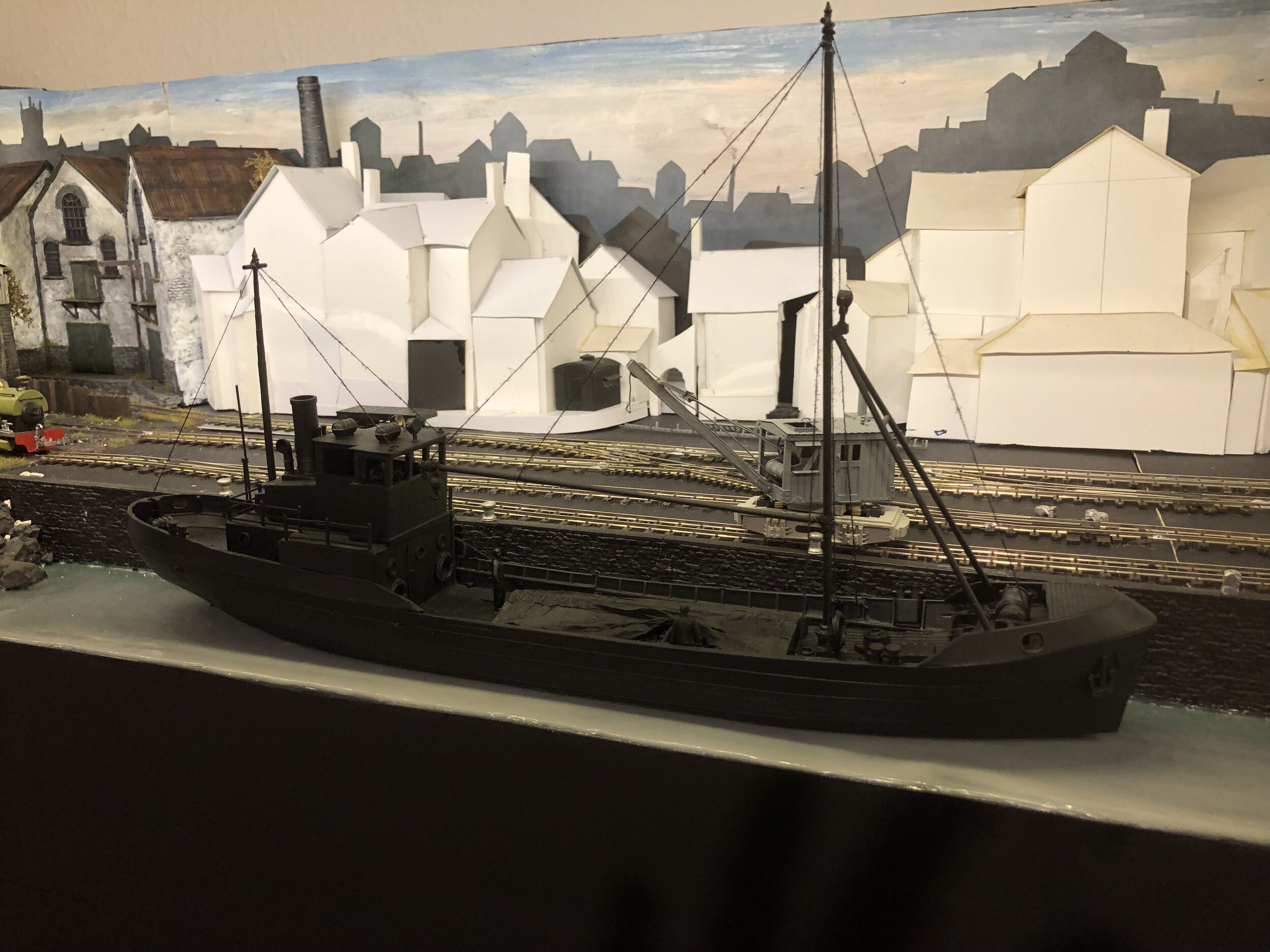
  So about 4 years ago I built this ship for my original harbour layout. Sadly it got smashed up during my move to Bristol. I have toyed with the idea of having it incorporated in my current layout as it’s size and position is a bit intrusive on the
pats.ng.work_bench_65417581_449296258984746_5755069576383550336_n.jpg
pats.ng.work_bench_65302403_909627276047409_5028843746836673970_n.jpg
  I’m still not too sure on the painted backscene but it’s better than the photo backscene I had purchased. I still have a couple other backscene options that I’m going to explore.
  It is DCC but only for a few locomotives that I don’t want to convert to radio control, the rest will be built or converted to RC. A huge step but a game changer! I will be running the points on a servo mimic system so I can run the layout without
pats.ng.work_bench_66279714_471902893379798_4410114116532373095_n.jpg
  I’ve mostly finished the first module, which is part of Harvey’s foundry and Penpol loco sheds. I am really pleased with how this has turned out, although this would be the third time I have built this as I had built a smaller foundry on the origin
pats.ng.work_bench_65829867_495676344308368_4080664058618623282_n.jpg
pats.ng.work_bench_65385794_358696078062344_8641702478155532037_n.jpg
pats.ng.work_bench_65915389_381851529351498_8422555801896906542_n.jpg
pats.ng.work_bench_66146266_2378330445784968_216464958261155065_n.jpg
  Almost finished track laying on the layout.
pats.ng.work_bench_64315096_2340661875969701_6370698427082373213_n.jpg
  Robert Stephenson 0-4-0 crane tank ‘Trecrombenn’ sits on shed at the end of the day. The location is Harvey’s Foundry, Penpol loco sheds, South Quay. The crane tank was named after a Stone Age hill fort that looks over Hayle estuary, now know as ‘T
  Hudswell Clarke 0-4-0ST has just been recoaled and awaits its next duty at Penpol loco sheds. She was delivered to Harvey’s Foundry new in 1897. The Gwen Class was chosen due to the typically robust design that this Leeds manufacturer was producing
  Peckett & Sons 0-6-0ST No. 6. This was 1 of 4 6-coupled Pecketts belonging to the Cornwall Electric Power Company (CEPC) located on the north quay of Hayle Harbour. She wears the original Black with white lined livery used by the power station.
  W G Bagnall 0-4-2T raises steam in the early morning. She was a late addition to Harvey’s fleet having arrived in 1929 to replace the worn out no. 5 Fox walker & sons cabless 0-4-0. The original No.5 had arrived in 1886 and was named Carnsew. T
pats.ng.work_bench_74814672_3691623260851621_1551061219314712214_n.jpg
IMG_4021.jpeg
 Building the extension on Hayle’s coal fired power station for the Cornwall Electric Power Company during the 1920’s. North British 2-6-2 number 4825 ready to run a rack of empties back up the steep incline to join the main line….
pats.ng.work_bench_67335967_2727125540650518_3252835949407059587_n.jpg
prev / next